


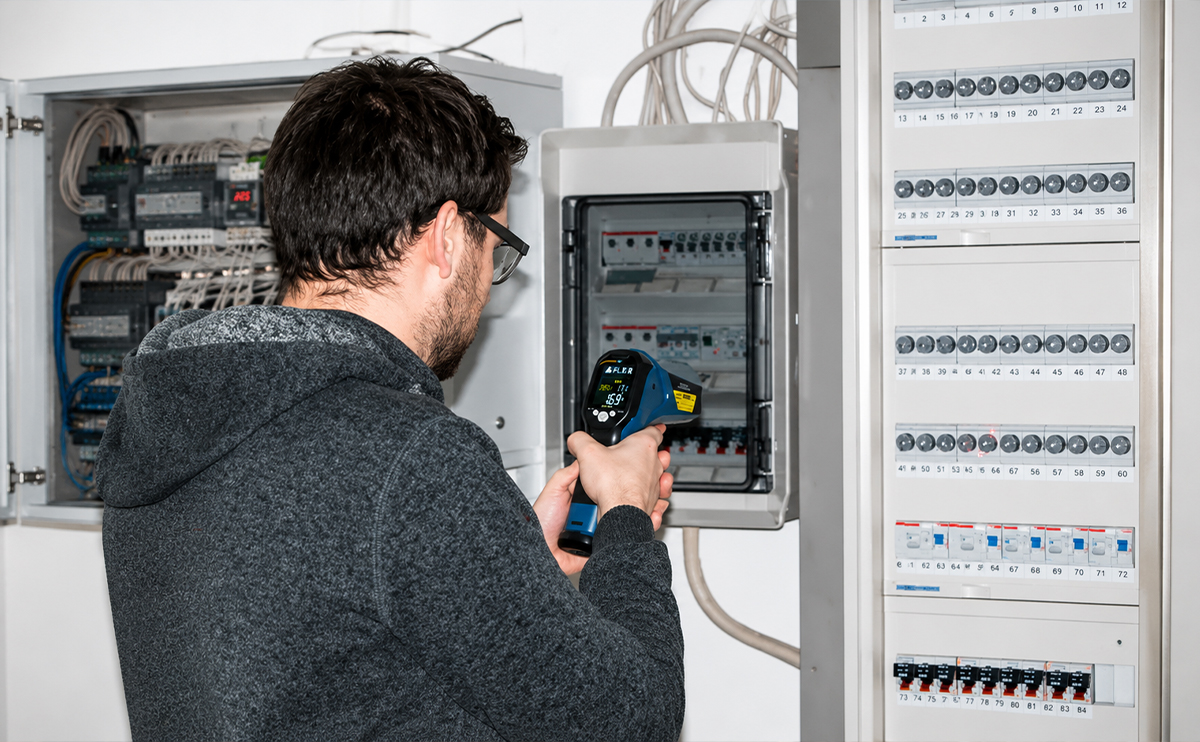
Accurate temperature measurement plays a vital role in ensuring safety, efficiency, and equipment reliability across many industries. From electrical maintenance and manufacturing to HVAC systems and quality control, monitoring temperature helps identify potential problems before they become costly failures. This is where infrared thermometers have become an essential tool. By measuring surface temperatures without making physical contact, they allow technicians to inspect hot, moving, or hard-to-reach equipment safely and efficiently.
If you are searching for an Infrared Thermometer Supplier in UAE, understanding the key features and applications of these instruments is the first step toward selecting the right solution. While different industries have unique requirements, choosing an infrared thermometer with the appropriate specifications ensures accurate measurements and dependable performance.
What Is an Infrared Thermometer?
An infrared thermometer is a non-contact temperature measuring device that detects infrared energy emitted by an object’s surface and converts it into a temperature reading. Unlike traditional contact thermometers, it allows users to measure temperatures from a safe distance without touching the equipment or material being tested.
Infrared thermometers are widely used in industrial environments because they provide fast, reliable, and safe temperature measurements. They are particularly useful when inspecting energized electrical components, rotating machinery, hot surfaces, or equipment that cannot be easily accessed.
Industries such as manufacturing, power generation, HVAC, food processing, automotive maintenance, and facility management rely on infrared thermometers as part of their routine inspection and preventive maintenance programs.
Why Choosing the Right Infrared Thermometer Matters
Not every infrared thermometer is designed for the same application. Selecting the wrong model can lead to inaccurate readings, poor inspection results, and unnecessary maintenance costs.
A properly selected infrared thermometer helps improve workplace safety by allowing technicians to inspect high-temperature equipment without direct contact. It also supports predictive maintenance by identifying abnormal temperature variations before they develop into equipment failures.
Choosing the right instrument also improves inspection speed, minimizes production downtime, and helps maintain product quality across industrial processes.
Key Factors to Consider Before Buying an Infrared Thermometer
Temperature Range
One of the first factors to evaluate is the instrument’s temperature range. Different applications require different measurement capabilities. For example, HVAC inspections may involve relatively low temperatures, while foundries, furnaces, and industrial manufacturing processes require instruments capable of measuring extremely high temperatures.
Selecting a thermometer with an appropriate measurement range ensures reliable and accurate readings throughout your operations.
Distance-to-Spot Ratio
The distance-to-spot (D:S) ratio determines the size of the area being measured from a particular distance. A higher ratio allows users to measure smaller targets accurately while standing farther away.
This feature is especially important when inspecting electrical panels, overhead equipment, or hazardous machinery where maintaining a safe working distance is essential.
Measurement Accuracy
Accuracy is one of the most important considerations when choosing any measuring instrument. Even small temperature variations can indicate developing faults in electrical systems, bearings, motors, or mechanical equipment.
High-accuracy infrared thermometers provide dependable measurements that help maintenance teams make informed decisions and avoid unnecessary repairs.
Adjustable Emissivity
Different materials emit infrared energy differently. Metals, plastics, painted surfaces, ceramics, and rubber all have different emissivity values.
An infrared thermometer with adjustable emissivity allows users to obtain more accurate readings across a wide variety of materials, making it suitable for diverse industrial applications.
Response Time
Industrial inspections often involve measuring multiple components quickly. A fast response time enables technicians to complete inspections efficiently while maintaining productivity.
This feature is particularly valuable during preventive maintenance schedules where hundreds of measurement points may need to be inspected within a limited timeframe.
Display and Additional Features
Modern infrared thermometers include several features that improve usability and measurement efficiency.
Useful features may include:
- Backlit LCD display
- Laser targeting
- Maximum and minimum temperature recording
- High and low temperature alarms
- Data logging capability
- Bluetooth or USB connectivity
- Memory storage for inspection reports
These features simplify documentation and help maintenance teams analyze equipment performance over time.
Choosing an Infrared Thermometer for Different Industries
Different industries require different measurement capabilities. Understanding your application helps you select the most suitable instrument.
Electrical Maintenance
Electrical systems generate heat when components become overloaded or begin to fail. Infrared thermometers help identify overheating breakers, transformers, switchboards, motors, and electrical connections before failures occur.
Routine thermal inspections improve electrical safety while reducing unexpected downtime.
HVAC Systems
Heating, ventilation, and air conditioning professionals use infrared thermometers to inspect ducts, compressors, condensers, evaporators, refrigerant lines, and ventilation systems. Quick temperature measurements help diagnose system inefficiencies and improve energy performance.
Manufacturing
Manufacturing facilities use infrared thermometers for monitoring machinery, production equipment, motors, conveyor systems, bearings, and process temperatures. Regular inspections help maintain consistent product quality while minimizing production interruptions.
Food Processing
Food manufacturers use infrared thermometers to verify surface temperatures during production, storage, and transportation. Non-contact measurements improve hygiene while supporting food safety procedures.
Automotive Maintenance
Automotive technicians rely on infrared thermometers to inspect engines, cooling systems, brakes, exhaust systems, wheel bearings, and electrical components without dismantling parts.
Common Mistakes to Avoid
Although infrared thermometers are easy to operate, incorrect usage can affect measurement accuracy.
One common mistake is measuring shiny or polished metal surfaces without adjusting emissivity. Reflective materials may produce inaccurate readings unless the instrument is properly configured.
Another mistake is attempting to measure temperatures through glass. Since infrared thermometers measure surface temperature, they cannot accurately determine the temperature of objects behind glass.
Ignoring the distance-to-spot ratio is another frequent error. Standing too far away may result in measuring surrounding objects instead of the intended target.
Users should also ensure the selected thermometer matches the required temperature range and periodically calibrate the instrument according to manufacturer recommendations to maintain accuracy.
Supporting Industrial Inspections with Complementary Measuring Instruments
An infrared thermometer provides valuable temperature data, but it often delivers the best results when used alongside other industrial measuring instruments. During electrical inspections, technicians may use a Clamp Meter to measure current while checking for overheating components with an infrared thermometer. This combination helps identify issues such as overloaded circuits, loose connections, and abnormal heat buildup more efficiently.
Similarly, an Earth Tester is used to verify grounding systems and electrical safety, complementing temperature measurements during routine inspections. Depending on the application, maintenance teams may also rely on professional testing solutions from PCE Instruments and HIOKI Measuring Instruments for electrical analysis, condition monitoring, environmental measurement, and precision testing. Using the right combination of instruments helps improve inspection accuracy, reduce downtime, and support proactive maintenance.
Why Choose NASCO for Industrial Measuring Solutions?
Selecting the right measuring instrument is just as important as selecting the right supplier. NASCO Naser Al Sayer & Co. L.L.C. offers a comprehensive range of industrial test and measuring instruments from globally recognized manufacturers, serving industries across the UAE.
Whether your requirements involve electrical testing, industrial maintenance, condition monitoring, environmental measurement, or precision inspection, NASCO provides reliable solutions designed to support operational efficiency and workplace safety. With access to trusted brands such as PCE Instruments and HIOKI, customers can find dependable measuring equipment suited to a wide range of industrial applications.
Conclusion
Choosing the right infrared thermometer involves evaluating factors such as temperature range, accuracy, distance-to-spot ratio, emissivity adjustment, response time, and application requirements. A well-selected instrument improves inspection accuracy, enhances worker safety, and supports preventive maintenance strategies that reduce equipment failures and costly downtime.
If you are looking for an Infrared Thermometer Supplier in UAE, it is equally important to choose a supplier with extensive expertise in industrial measuring technologies. While infrared thermometers are an essential part of many inspection programs, they deliver even greater value when used alongside professional instruments such as clamp meters, earth testers, and advanced testing solutions from PCE Instruments and HIOKI. NASCO Naser Al Sayer & Co. L.L.C. continues to support industries across the UAE with reliable test and measuring instruments that help improve safety, efficiency, and operational performance.
Frequently Asked Questions (FAQs)
Calibration frequency depends on how often the instrument is used and the operating environment. For industrial applications, regular calibration according to the manufacturer’s recommendations helps maintain accurate and reliable temperature measurements.
Infrared thermometers measure the surface temperature of liquids without making contact. However, factors such as reflections, steam, or surface movement can affect accuracy, so proper measurement techniques should be followed.
Yes. Infrared thermometers are widely used for outdoor inspections in industries such as power generation, oil and gas, and HVAC. However, environmental conditions like direct sunlight, dust, or rain may influence readings, so measurements should be taken carefully.
The laser pointer only indicates the approximate target location. The actual area being measured depends on the thermometer’s distance-to-spot ratio, making it important to follow the recommended measuring distance for accurate results.
Yes. Infrared thermometers are commonly included in preventive and predictive maintenance programs to monitor equipment temperatures regularly. Identifying unusual heat patterns early helps reduce unplanned downtime and maintenance costs.
Using an infrared thermometer alongside tools such as clamp meters, earth testers, and power quality analyzers provides a more comprehensive assessment of equipment condition. Combining temperature measurements with electrical and mechanical testing helps technicians diagnose faults more accurately and improve maintenance efficiency.