Condensing units are an essential part of commercial and industrial refrigeration systems. They help remove heat from the refrigerant and support the cooling process required for cold rooms, freezers, supermarkets, food storage facilities, display cases, and other temperature-controlled applications. Since these systems often operate for extended periods, proper maintenance is essential for reliable performance and longer service life.
Regular maintenance can help reduce unexpected breakdowns, maintain consistent cooling, improve energy efficiency, and protect important refrigeration components. Businesses looking for dependable refrigeration equipment can also benefit from working with an experienced condensing unit supplier that can provide suitable equipment and technical support.
NASCO Naser Al Sayer & Co. L.L.C. supplies refrigeration and HVAC equipment for different commercial and industrial requirements, helping businesses select suitable solutions for their applications. However, selecting quality equipment is only the first step. Proper maintenance is equally important for maintaining long-term performance.
Why Condensing Unit Maintenance Matters
A condensing unit works by removing heat from the refrigerant and releasing it into the surrounding environment. Components such as the compressor, condenser coil, fan, electrical controls, and refrigerant circuit work together to maintain the refrigeration cycle.
Over time, dust, dirt, grease, and debris can accumulate around the condenser coil and fan. Electrical connections may loosen, components can wear, and airflow can become restricted. If these issues are ignored, the system may consume more energy while providing less effective cooling.
Regular maintenance allows potential problems to be identified before they result in major equipment failure. It also helps technicians monitor the condition of critical components and determine when cleaning, adjustment, or replacement is required.
1. Keep the Condenser Coils Clean
Regular condenser cleaning is particularly important for air-cooled condensing units, as dust and debris can accumulate on the condenser coil and restrict airflow. Keeping the coil clean allows heat to dissipate effectively and helps the unit maintain efficient operation.
A dirty condenser may cause higher operating temperatures and pressures, forcing the refrigeration system to work harder. This can increase energy consumption and place additional stress on the compressor.
The condenser coil should be inspected and cleaned at appropriate intervals based on the operating environment. Facilities exposed to dust, grease, or other contaminants may require more frequent cleaning.
Technicians should use suitable cleaning tools and methods to avoid damaging the delicate condenser fins.
2. Check Condenser Fan Operation
Condenser fans are particularly important in air-cooled condensing units, where they move air across the condenser coil to remove heat. Fan blades, motors, and surrounding airflow should therefore be checked regularly for smooth and efficient operation. If the fan is damaged, operating slowly, or not working, the condensing unit may struggle to release heat effectively.
During maintenance, the fan blades should be inspected for damage, while the motor should be checked for unusual noise, vibration, or operating issues. The fan should rotate smoothly without unnecessary resistance.
The area around the fan should also remain clear. Boxes, equipment, waste, vegetation, or other obstructions can restrict airflow and affect the performance of the condensing unit.
3. Inspect Electrical Connections
Electrical components should be inspected regularly by qualified technicians. Loose terminals, damaged wiring, worn contactors, or signs of overheating can affect system reliability.
Important electrical components may include contactors, relays, capacitors, terminals, wiring, and control devices. Technicians can inspect these components for visible damage or abnormal operating conditions.
Early identification of electrical problems can help reduce the risk of unexpected shutdowns, particularly in refrigeration systems that operate continuously.
4. Monitor Refrigerant Conditions
Refrigerant is essential to the refrigeration cycle, and an incorrect charge or refrigerant leak can affect system performance.
Reduced cooling capacity, unusual operating pressures, excessive running time, or unexpected ice formation can indicate that the system requires professional inspection.
Refrigerant-related work should be performed by qualified refrigeration technicians using appropriate tools and procedures. Simply adding refrigerant without identifying the cause of a problem may not provide a long-term solution.
Regular system inspections can help identify leaks and other refrigerant-related issues before they significantly affect refrigeration performance.
5. Check Compressor Performance
The compressor is a critical component of a condensing unit. It circulates refrigerant through the system and maintains the pressure difference necessary for the refrigeration cycle.
During scheduled maintenance, technicians can inspect compressor operating conditions, temperature, pressure, electrical performance, noise, and vibration.
Unusual sounds or excessive vibration may indicate a developing mechanical or electrical issue. Maintaining clean condenser coils and proper airflow can also help prevent unnecessary stress on the compressor.
For refrigeration applications requiring dependable compressor technology, established brands such as Bitzer are widely used across commercial and industrial refrigeration applications.
6. Maintain Proper Airflow Around the Unit
Adequate airflow is essential for effective heat rejection. Condensing units should have sufficient clearance around the condenser so that hot air can move away from the equipment.
Objects positioned too close to the unit can restrict airflow and cause heat to accumulate around the condenser. This can increase operating temperatures and place additional load on the refrigeration system.
The surrounding area should therefore be kept clean and free from unnecessary obstructions. Indoor installations should also have suitable ventilation based on the equipment requirements.
When selecting a new system, businesses should discuss installation and airflow requirements with their condensing unit supplier.
7. Inspect Refrigerant and Electrical Lines
Refrigerant piping and electrical cables should be visually inspected during routine maintenance. Technicians should check for physical damage, corrosion, loose supports, unusual wear, or other signs of deterioration.
Oil marks around refrigeration connections may sometimes indicate a possible refrigerant leak, although proper testing is required to determine the actual cause.
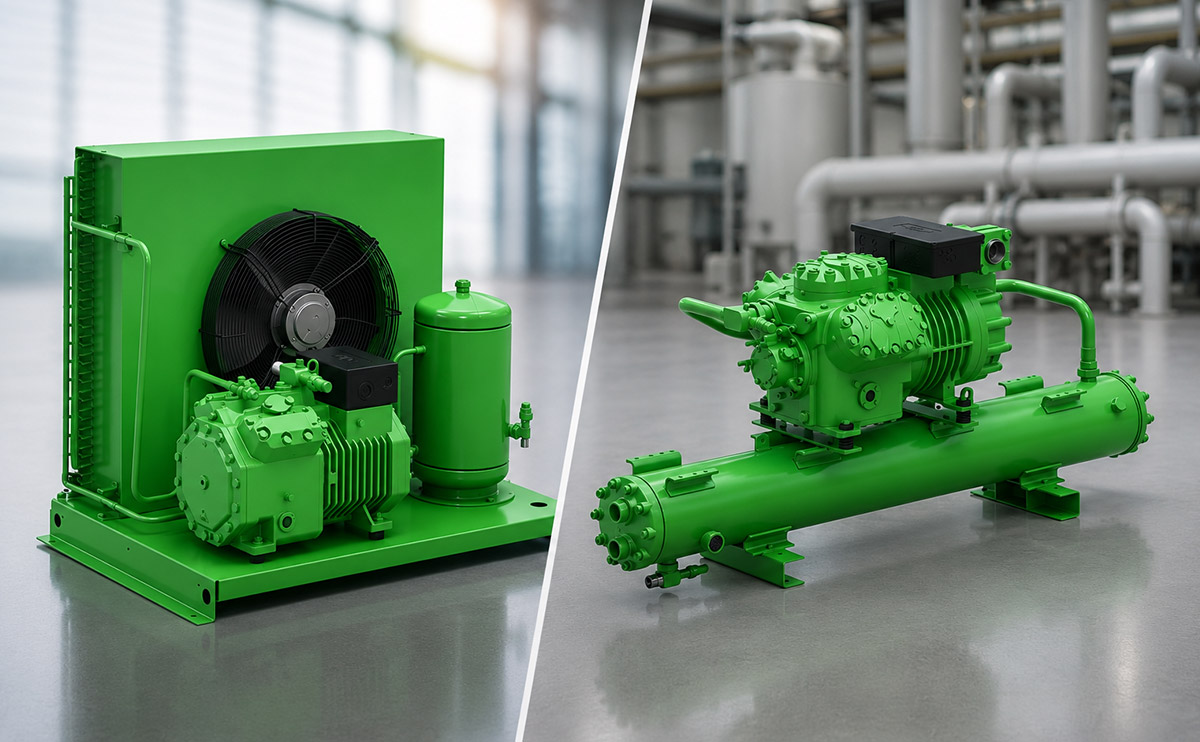
Refrigerant pipes should be properly supported to minimize vibration and mechanical stress. Electrical cables should also be protected against excessive heat, moisture, and physical damage. Maintenance requirements can also vary depending on the type of condensing unit being used. While air-cooled systems rely on proper airflow and clean condenser coils, water-cooled condensing units require attention to the water circuit and heat-transfer components. Water flow, connections, and related components should be inspected regularly to help maintain efficient heat rejection and prevent performance issues.
8. Check for Unusual Noise and Vibration
Changes in equipment noise or vibration can provide an early indication of mechanical problems. A condensing unit that suddenly becomes louder or develops unusual vibration should be inspected.
Potential causes can include loose mounting components, fan problems, compressor issues, worn bearings, or vibration within the refrigeration piping.
Identifying these issues early can help prevent minor mechanical problems from developing into more expensive repairs.
9. Monitor Operating Temperatures and Pressures
Monitoring operating temperatures and pressures provides useful information about refrigeration system performance.
Abnormal readings may be associated with restricted airflow, dirty condenser coils, refrigerant problems, compressor issues, or restrictions within the refrigeration circuit.
Maintaining service records can make these changes easier to identify. Comparing current readings with previous maintenance records can help technicians determine whether system performance is changing over time.
10. Inspect Condenser Fins
Condenser fins increase the available surface area for heat transfer. However, they can become bent, blocked, or damaged through normal operation and cleaning.
Bent fins can restrict airflow through the condenser and reduce heat transfer efficiency. During routine maintenance, technicians should inspect the fins and carefully correct minor damage where appropriate.
Because condenser fins can be delicate, excessive pressure or unsuitable cleaning methods should be avoided.
11. Keep Maintenance Records
Maintaining detailed service records can help businesses manage refrigeration equipment more effectively. Records can include cleaning dates, inspection results, operating readings, component replacements, identified faults, and other service activities.
A maintenance history allows technicians to understand how equipment has performed over time. It can also help businesses identify recurring problems and plan preventive maintenance.
For facilities operating multiple refrigeration systems, organized maintenance records can make it easier to prioritize equipment requiring attention.
12. Follow Manufacturer Recommendations
Every condensing unit can have specific operating and maintenance requirements. Therefore, maintenance should follow the manufacturer’s recommendations and technical documentation.
The manufacturer’s information can provide important details regarding cleaning, operating conditions, component specifications, service intervals, and installation requirements.
Working with an experienced condensing unit supplier can also help businesses understand the requirements of the selected equipment and identify suitable replacement components when necessary.
13. Schedule Preventive Maintenance
Preventive maintenance is generally more effective than waiting until refrigeration equipment fails. A planned maintenance schedule gives technicians an opportunity to inspect critical components before they cause unexpected downtime.
Maintenance frequency depends on factors such as operating hours, environmental conditions, refrigeration load, installation location, and system design.
Commercial refrigeration systems operating continuously or in dusty and demanding environments may require more frequent inspections and cleaning.
A preventive maintenance program can include condenser cleaning, fan inspection, electrical checks, operating-condition monitoring, compressor inspection, and general system assessment.
14. Replace Worn Components Promptly
Some refrigeration components naturally experience wear over time. Fan motors, electrical components, bearings, seals, and other parts may eventually require replacement.
Continuing to operate a system with a known damaged component can increase the possibility of further equipment problems. Replacing worn components at the appropriate time can help maintain reliability.
Replacement parts should be compatible with the specific condensing unit and refrigeration system. Choosing suitable components helps maintain the intended performance of the equipment.
15. Choose the Right Condensing Unit
Selecting the right condensing unit is an important part of achieving reliable long-term refrigeration performance. Depending on the application and installation environment, businesses may consider air-cooled or water-cooled condensing units. Factors such as available space, ambient conditions, water availability, cooling requirements, maintenance needs, and operating environment should be considered before making a selection.
A unit that is unsuitable for the application may operate inefficiently or experience unnecessary stress. Proper sizing and selection can therefore have a significant impact on equipment performance and maintenance requirements.
For example, a Tecumseh Condensing Unit can be considered for suitable commercial refrigeration applications where its specifications match the system requirements.
An experienced condensing unit supplier can help businesses compare available solutions and select equipment appropriate for their specific refrigeration needs.
The Importance of Choosing a Reliable Supplier
Equipment quality, correct selection, availability of replacement components, and technical support can all influence the long-term operation of a refrigeration system. At NASCO Naser Al Sayer & Co. L.L.C., we understand the importance of selecting condensing units according to specific application requirements rather than simply focusing on price. We provide refrigeration and HVAC solutions for commercial and industrial applications, offering equipment from established manufacturers and supporting customers in selecting suitable solutions for their refrigeration needs.
Conclusion
Regular maintenance is essential for keeping condensing units operating efficiently and reliably. Cleaning condenser coils, checking fans, inspecting electrical connections, maintaining proper airflow, monitoring operating conditions, and addressing worn components can help reduce the risk of unexpected failures and support longer equipment life.
Businesses should also ensure that technical maintenance involving refrigerants, electrical components, compressors, and refrigeration circuits is carried out by qualified professionals.
Choosing suitable equipment from a dependable Condensing Unit Supplier is equally important. Brands such as Tecumseh and Bitzer offer established refrigeration solutions for various applications, but the right equipment should always be selected according to the specific system requirements.
With proper equipment selection, professional installation, regular inspection, and preventive maintenance, businesses can maintain dependable refrigeration performance and get greater long-term value from their condensing units.
Frequently Asked Questions (FAQs)
Condensing units should be inspected and maintained regularly, with frequency depending on usage, operating environment, and manufacturer recommendations.
Air-cooled units require regular condenser coil cleaning, fan inspection, airflow checks, and general system inspection.
Water-cooled units require checks of water flow, connections, heat-transfer components, and the water circuit to maintain efficient operation.
Regular preventive maintenance, proper airflow, timely component replacement, and correct operating conditions can help extend its service life.
Consider the cooling capacity, application, ambient conditions, installation space, refrigerant requirements, and whether an air-cooled or water-cooled system is more suitable.
A reliable supplier can help you select suitable equipment, provide compatible components, and support proper installation and long-term maintenance.